10 Benefits of Structured Cabling for Growing Businesses
Growth tends to expose every weakness in a company’s infrastructure. A team that once shared a few desks and one printer suddenly needs reliable Wi-Fi in three suites, secure connections for VoIP phones, fast access to cloud apps, support for cameras and access control, and enough capacity for new hires who seem to arrive every month. Many businesses try to patch their way through that transition. They add one switch here, run a loose cable there, mount another access point in the hallway, and hope the network keeps up.
That approach works, until it does not.
Structured cabling gives a business a predictable, organized foundation for connectivity. Instead of treating every device as a one-off problem, it creates a system for how data moves through the building. That includes ethernet cabling, patch panels, racks, labeling, cable pathways, termination standards, testing, and the practical design choices that make future changes far easier. In real offices, warehouses, clinics, schools, and mixed-use spaces, the difference between improvised wiring and proper structured cabling is obvious within a year, and often much sooner.
For growing businesses, the benefits are not abstract. They show up in fewer outages, cleaner expansions, faster troubleshooting, better performance, and lower long-term cost.
Growth is easier when the foundation is already there
The first major benefit of structured cabling is simple: it makes expansion far less painful.
A small company may begin with a dozen workstations and a single internet circuit. Two years later, it may need double the desks, security cameras, wireless access points, conference room displays, and segmented networks for staff, guests, and devices. If the original office network cabling was installed ad hoc, each addition becomes a custom project. Someone has to trace mystery cables, find spare ports, verify terminations, and guess whether the existing runs can support new speeds or power requirements.
With structured cabling, growth is planned into the physical layer. That usually means cabling runs home to a centralized closet or telecommunications room, patch panels are labeled consistently, pathways have room for additions, and cable categories are chosen with future bandwidth in mind. A new desk does not require detective work. It usually requires a patch, a switch port, and a quick test.
I have seen businesses save days of disruption during office expansions simply because their cabling was documented and terminated properly from the beginning. One tenant fit-out added 28 workstations, six phones, four cameras, and three access points over a long weekend. The network came online on schedule because every run had been labeled, tested, and mapped. In another office where data cabling had grown in layers over time, adding half that many devices took nearly two weeks because no one trusted what was behind the ceiling.
That difference matters when payroll is running, customer calls are waiting, and teams are trying to work.
Performance becomes more consistent across the whole workspace
The second benefit is better and more predictable network performance.
A lot of connectivity complaints get blamed on the ISP or the wireless network, but poor physical cabling is often part of the problem. Bad terminations, excessive untwisting, kinked cable, runs too close to electrical interference, mismatched categories, and undocumented splices can all hurt performance. Sometimes the impact is obvious, like dropped calls or slow file transfers. Sometimes it is subtle, like intermittent lag in cloud applications that wastes a few minutes at a time across an entire staff.
Structured cabling reduces that variability. Proper network cabling installation follows established standards for length, bend radius, separation from power, termination, and testing. When the physical layer is sound, the rest of the network has a fair chance to perform as designed.
This becomes especially important as businesses move toward bandwidth-hungry applications. Video conferencing, large shared files, surveillance systems, cloud backups, and real-time collaboration platforms all demand stable throughput. CAT6 cabling is still a strong fit for many offices, particularly where 1 Gbps is standard and some 10 Gbps support is needed over shorter distances. CAT6A cabling often makes more sense where businesses want more headroom, higher PoE support confidence, or cleaner support for 10-gigabit applications across longer runs.
The point is not that every company needs the highest spec available. The point is that structured cabling gives the business a defined, testable baseline, not a patchwork of uncertain links.
Downtime becomes less frequent, and less expensive
Every business owner understands the visible cost of downtime. Less obvious is the cumulative drag caused by brief, recurring disruptions. A printer drops offline. A POS terminal loses connection. A conference room cannot join a client meeting. A phone extension crackles or fails. A camera feed flickers. Each issue may be small, but together they chip away at productivity and trust.
Structured cabling cuts that risk because the system is designed for stability, not improvisation.
When low voltage cabling is installed with disciplined routing, proper cable management, clean termination, and certification testing, there are fewer random failure points. Cables are less likely to be pinched, stressed, or disturbed during routine maintenance. Ports are easier to identify. Moves and changes do not require someone to unplug live systems just to figure out what goes where.
One facilities manager I worked with described it well: the best cabling job is the one nobody thinks about. That is exactly right. End users should not have to wonder whether the network will hold up when the office gets busy. Their expectation should be boring reliability.
For a growing business, boring reliability is a competitive advantage.
Troubleshooting gets faster because the network is legible
A well-built cabling system is readable. That may not sound exciting, but when something goes wrong at 8:15 on a Monday morning, readability matters.
In a structured environment, labels match the patch panel, wall jack, and documentation. The switch port can be traced to a location without guesswork. Cable routes are organized. Patch cords are not tangled into a dense knot of forgotten changes. A technician can isolate a fault quickly, whether the issue sits at the workstation, in the closet, or upstream.
In a messy environment, everything takes longer. People start swapping cords blindly. Active ports get disconnected by mistake. Someone traces the wrong cable through a crowded bundle. A simple issue becomes an outage in another department.
This is the fourth benefit, and it is one that often gets underestimated during budgeting. Labor is expensive, especially when senior IT staff or outside vendors spend hours diagnosing a problem that clean office network cabling would have made obvious in minutes.
There is also a business continuity angle here. If a company depends on an external IT partner, structured cabling reduces the amount of site-specific tribal knowledge required to support the environment. That is useful when staff changes, vendors change, or multiple people need to work on the same system over time.
Moves, adds, and changes stop feeling like mini construction projects
Growing businesses are constantly in motion. Teams get rearranged. Departments expand. A conference room becomes three offices. A storage area turns into a training space. New devices appear without much warning because an operations team found a need and acted on it.
Without structured cabling, each change can feel disruptive. Ceiling tiles come down. Extension cords and unmanaged switches appear under desks. Temporary fixes become permanent eyesores. Before long, the physical network reflects years of exceptions rather than a coherent design.
Structured cabling makes those routine changes manageable. Because endpoints terminate into a central system, reconfiguration often happens in the closet rather than across the whole floor. A desk move may need nothing more than repatching. A department shuffle may only require activating ports that were already installed but not yet in use.
That flexibility is one of the reasons business network installation should be treated as infrastructure, not décor. The cables behind the walls influence how easily the space can evolve. Businesses that understand this early tend to spend less on rework later.
It supports more than computers, which matters more every year
Many business owners still hear the word cabling and think only about desktop PCs. In practice, modern structured cabling supports a much wider set of systems.
Phones, wireless access points, surveillance cameras, door access controls, digital signage, point-of-sale devices, copiers, smart building sensors, and audiovisual gear all rely on the same physical discipline. Some of these devices need only connectivity. Others need both connectivity and power over Ethernet. All of them benefit from organized low voltage cabling.
That is the sixth benefit: one well-planned cabling platform can support many business systems at once.
This has practical value during expansion. Instead of coordinating separate and conflicting installs for security, IT, and facilities, a business can work from a shared physical infrastructure plan. That does not mean every contractor does the same job, but it does mean the pathways, rack space, labeling scheme, and endpoint strategy are coordinated. The result is fewer surprises and a cleaner handoff.
It also helps when tenants take over second-generation spaces. I have walked into offices where one vendor ran network cabling, another added camera lines without documentation, and a third reused old voice pathways for new equipment. Nothing matched. The business paid more to untangle the past than it would have paid to build the present properly.
Better safety and appearance are not cosmetic issues
There is a temptation to treat cable organization as an aesthetic preference. It is not.
Loose, exposed, and undocumented cabling creates operational and safety problems. It can obstruct airflow in racks, complicate maintenance, increase the chance of accidental disconnection, and create messy pathways above ceilings or along walls. In customer-facing environments, visible cable clutter also signals disorder, even if the business itself is competent and professional.
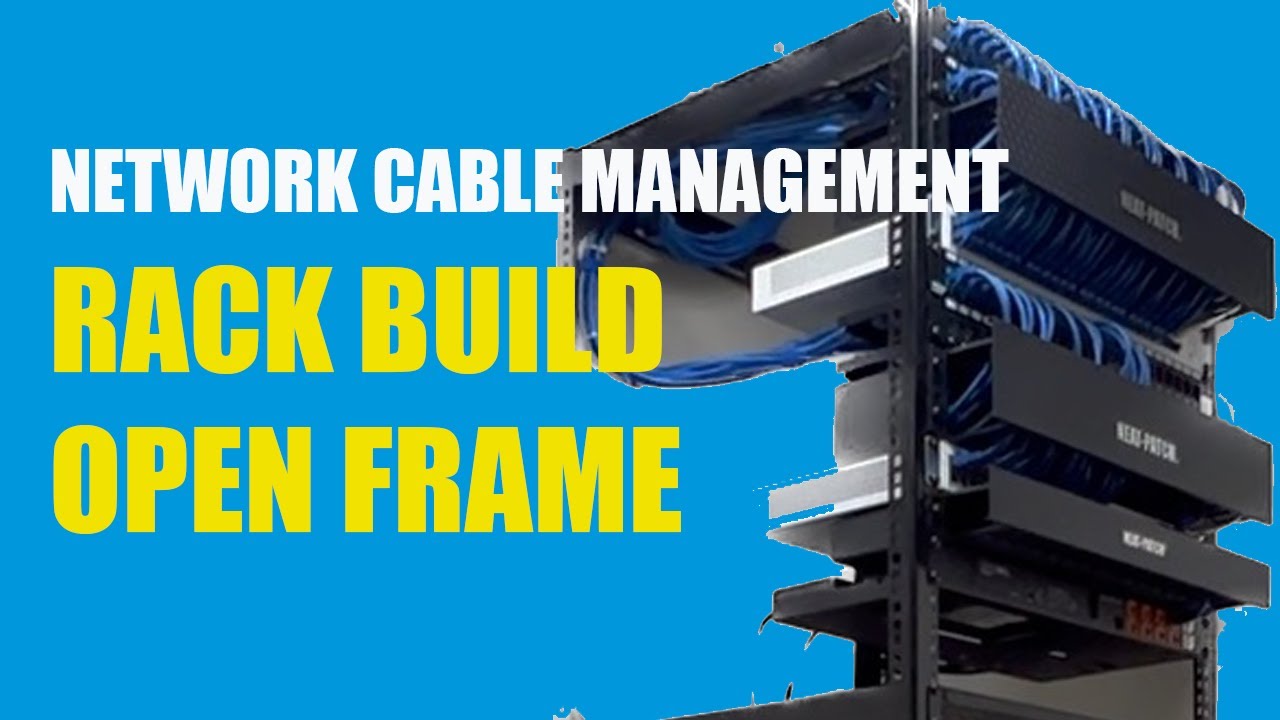
Structured cabling improves both safety and presentation because it imposes physical order. Pathways are defined. Cables are bundled and supported appropriately. Racks are laid out so equipment can be serviced without creating chaos. Patching is intentional rather than improvised.
For businesses in regulated or semi-regulated environments, this becomes even more important. Medical offices, financial firms, schools, and industrial spaces often have stricter expectations around documentation, maintenance access, and reliability. Clean data cabling will not satisfy every compliance requirement on its own, but it does make compliance easier to support.
The long-term cost is usually lower, even if the upfront quote is higher
This is where some projects stall. A structured cabling proposal can look expensive compared with the cost of running just enough cable to make the immediate problem go away. If the business is watching cash carefully, the cheapest bid can seem attractive.
That is often a short-term decision with long-term consequences.
The eighth benefit of structured cabling is lower total cost of ownership. Not lower day-one cost, necessarily, but lower cost over the life of the space.
A proper network cabling installation costs more because it includes planning, pathway management, standardized terminations, testing, labeling, and often higher-quality components. Yet those choices reduce future labor, cut troubleshooting time, extend useful life, and make expansions cheaper. Businesses also avoid the hidden costs of repeated patch jobs, inconsistent performance, and emergency service calls.
A rough rule from real projects: if a business expects to stay in a space for several years and anticipates headcount, device count, or system complexity to rise, underbuilding the cabling is rarely the bargain it appears to be. Paying once for a clean foundation is usually cheaper than paying repeatedly to work around a poor one.
There are limits to this logic. Not every small space needs premium cable everywhere. Not every tenant improvement should be overengineered. Good judgment matters. A smart installer matches the design to the business case rather than selling maximum spec by default.

Faster network speeds and better power delivery stay on the table
The ninth benefit is future readiness, though that phrase often gets abused. The practical version is this: structured cabling preserves your options.
A business may not need 10-gig uplinks to every endpoint today. It may not have PoE cameras across the property or Wi-Fi 6E access points everywhere. But if the cabling plant is sound and the category selection was sensible, those upgrades remain possible without reopening walls and ceilings.
CAT6 cabling gives many organizations a strong balance between https://johnnynpvh869.novacrestiq.com/posts/business-network-installation-for-startups-build-it-right-the-first-time cost and performance. CAT6A cabling can be the better investment where heat, bundle size, PoE loads, and longer-term bandwidth expectations point that way. The right answer depends on the site, the application mix, and the likely timeline of upgrades. Warehouses, healthcare spaces, high-density offices, and new construction projects often justify more headroom than a small professional suite with modest traffic.
What matters is that structured cabling keeps those decisions open. Poorly installed legacy cable tends to force upgrades prematurely because the physical plant becomes the bottleneck. A well-installed system lets the business replace active equipment, switches, and endpoints on its own schedule.
Property value and tenant appeal can improve quietly but meaningfully
For owner-occupied buildings and landlords alike, structured cabling can add practical value to the property.
Prospective tenants and buyers increasingly ask about connectivity with the same seriousness they bring to HVAC, parking, and security. They want to know whether the space can support their operations without a long and disruptive retrofit. If a building already has organized pathways, rack locations, fiber backbones where appropriate, and modern office network cabling, it becomes easier to lease and easier to adapt.
This is the tenth benefit, and it often gets noticed only at transaction time. A business that invested in solid cabling for its own use may later discover that the same investment improved the flexibility and appeal of the space itself.
It is not unlike electrical infrastructure. Few people admire it directly, but everyone values a building that can handle real operational demand.
What good structured cabling looks like in practice
Businesses sometimes ask what separates a professional structured cabling project from a basic cable pull. The answer is usually visible within minutes of opening the telecom closet or reviewing the test records.
A solid installation typically includes:
- Clearly labeled runs, jacks, patch panels, and documentation
- Cable pathways and support that protect the cable and allow future additions
- Terminations done to standard, with testing to verify performance
- Rack and patching layouts that are serviceable, not overcrowded
- Category choices, such as CAT6 cabling or CAT6A cabling, matched to real needs
If one or two of those are missing, the system may still function, but it is less likely to age well.
Choosing the right scope for a growing company
Not every business needs the same structured cabling design, and that is where experience matters. A law office with 20 employees has different needs from a light industrial facility with barcode scanners, cameras, and wireless coverage across a warehouse floor. A medical practice may prioritize segmentation, uptime, and device density in exam rooms. A fast-growing creative firm may care more about conference spaces, high-throughput shared storage, and easy desk reconfiguration.
The best business network installation starts with use, not just square footage. How many users are there today, how many are likely within three to five years, what systems need power over Ethernet, where are the choke points, which spaces may be reconfigured, and how much downtime can the business tolerate? Those questions shape the design far better than price per drop alone.
This is also where a competent installer earns trust by pushing back when needed. If a client wants the cheapest possible data cabling in a space that is likely to be reworked in 18 months, a restrained plan may be appropriate. If the client wants to save a little now by underspecifying a new headquarters they intend to occupy for a decade, the right advice may be to spend more once and avoid years of friction.
That balance, between practicality and foresight, is the real value of a professional approach.
A stronger network begins behind the walls
When businesses think about growth, they usually focus on people, revenue, systems, and customer demand. The physical network often gets attention only after it causes pain. That is backward. Reliable growth depends on infrastructure that can absorb change without constant rework.
Structured cabling does that quietly. It creates order where improvisation would create fragility. It supports better performance, cleaner expansions, faster troubleshooting, stronger reliability, and more predictable costs. It also gives a business room to evolve, whether that means adding staff, rolling out new devices, upgrading Wi-Fi, or integrating security and building systems more cleanly.

For a growing company, network cabling is not just a technical detail. It is a business decision. And when that decision is made well, the benefits show up every day, even when nobody notices the cables at all.
Fontana Tech Pros provides professional network cabling installation, structured cabling, fiber optic installation, commercial WiFi, access control, security camera installation, alarm systems, and phone system solutions for businesses throughout Southern California. Learn more at https://fontanatechpros.com/.
Fontana Tech Pros specializes in reliable network cabling solutions for commercial offices, warehouses, schools, and industrial facilities. Our experienced team delivers high-quality structured cabling and low-voltage installations designed for long-term performance.